How Do Porta Potties Work?
The setup is simpler than people expect. A standard unit sits about 44 by 48 inches on the ground and stands roughly 92 inches tall, small enough to fit a job site corner or a backyard without eating your whole layout. Below the seat is a holding tank, 60 to 70 gallons, pre-charged with a blue deodorizing chemical that breaks down waste and knocks out odor between services. There is no flush, no water line, no plumbing. Ventilation pipes at the top pull air out and keep the smell down between visits. For a construction worker running to a porta-potty between tasks, that means one is nearly always within reach without the crew waiting on a trailer hookup. If you are trying to figure out the right count for your Rogers crew, our guide on how many porta potties you need walks through OSHA's ratios under OSHA 1926.51(c)(1): one toilet for 20 workers or fewer, then additional seats as headcount climbs past that. Basic units cost less than most people guess, and you can see current numbers on our porta potty rental cost page.
How Does a Portable Sink Work?
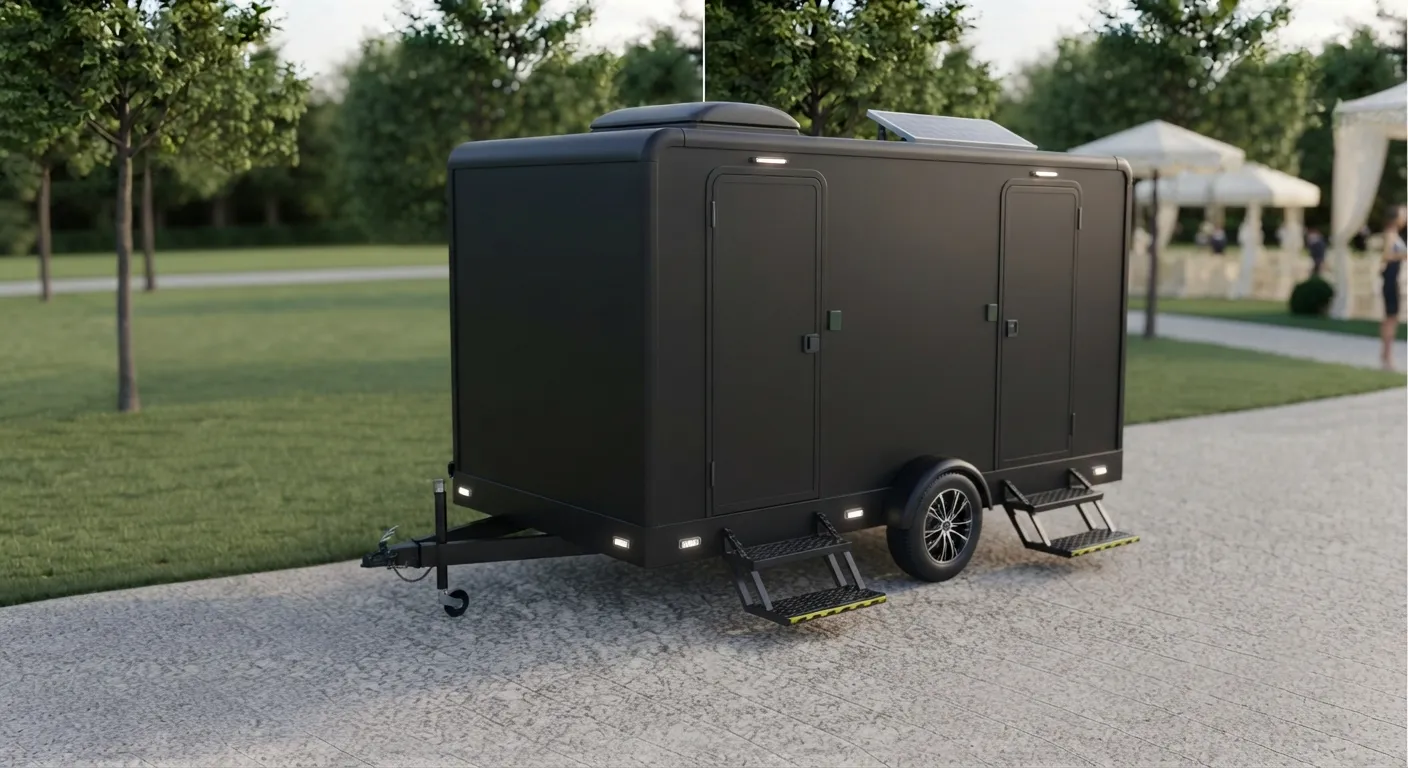
A portable sink runs on the same no-hookup logic as the toilet. It has a freshwater reservoir, usually foot-pumped or hand-pumped, a small basin, and a separate gray water tank underneath to catch runoff. Soap gets mounted right on the unit. Under 29 CFR 1910.141(d)(2), a proper handwashing setup needs soap and towels or a hand dryer, not just sanitizer, and our handwashing station rental units are built to meet that. If your Rogers crew is applying paints, coatings, herbicides or insecticides, OSHA 1926.51(f)(1) specifically requires washing facilities on site, so a portable sink rental next to the standard porta potty rental covers that requirement directly. Some jobs just need a quick sanitizer option instead; check our hand sanitizer station rental page if that fits better.
How Do Flushable Porta Potties Work?
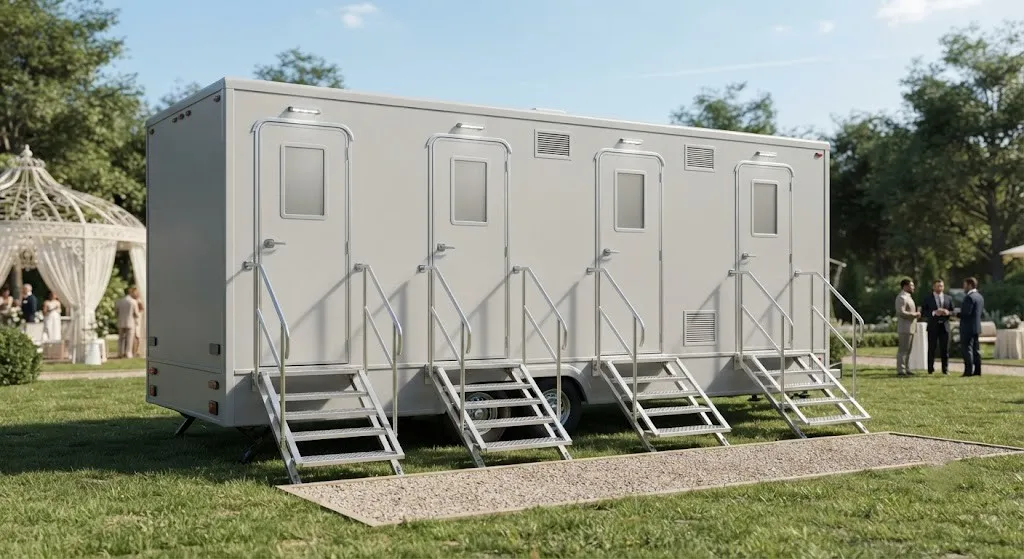
A deluxe flushable porta potty adds a small onboard freshwater tank and a foot-pump or pressurized flush that pushes a splash of water into the bowl after each use, which cuts odor and keeps the bowl cleaner between services than a standard chemical-only unit. It still uses a holding tank underneath, just like the standard model, so nothing connects to a sewer line. These units run higher than a standard toilet but lower than a full trailer, and they are the right call for weddings, graduations, and other events where guests expect more than a bare-bones unit. Our event restroom rental and wedding restroom rental pages both spec these out for common guest counts. For something with actual plumbing, running water at every station and climate control, step up to a restroom trailer rental, which works more like a real bathroom than a portable unit ever will.
How Do Camping Porta Potties Work?
Camping-style units work the same way as job site standards: sealed tank, chemical deodorizer, no water needed, which is exactly why they hold up at remote sites. For a weekend at a Rogers-area campground or a hunting lease outside town, that self-contained design means no generator, no water truck, nothing but a level spot to set the unit down. If you are hosting a gathering at a property near Bentonville, 7.3 miles northwest, or out toward Prairie Creek, 8.3 miles east, the delivery logic is identical: a truck needs about 60 feet of straight clearance to place and pump the unit, so clear that path before delivery day. Our camping porta potty page covers weekend and multi-day options, and the porta potty placement guide has more on siting a unit on uneven ground.
Septic Tank Cleaning Chemicals: Do They Matter?
The deodorizing chemical in a porta potty tank is a consumer-grade product distinct from anything used in septic tank cleaning chemicals for a household system, so do not confuse the two. A residential septic tank typically needs pumping every 3 to 5 years depending on tank size and household size, a maintenance schedule totally separate from portable toilet servicing. If your Rogers home is due, our septic pumping service and how often to pump a septic tank pages explain the signs to watch for, and septic tank warning signs covers what slow drains or soggy yard patches usually mean. Restaurants searching "portable toilet chemicals near me" alongside grease questions should note that a grease interceptor gets pumped once fats, oils, grease and solids hit 25 percent of the liquid depth, a different threshold entirely, covered on our grease trap pumping page.
Frequently asked questions
How often does a porta potty get serviced?
The baseline under ANSI/PSAI Z4.3 is one service visit per week for up to 10 users across a 40 hour week. Busy job sites or multi-day events in Rogers often need twice-weekly pumping. See how often are porta potties cleaned for details on scheduling around your crew size.
Do porta potties smell?
They can, if service falls behind or ventilation gets blocked. Deodorizer chemical and roof vents handle most odor between pumps. Our do porta potties smell page covers what actually causes it and how placement affects airflow.
Can I get an ADA accessible unit?
Yes. Where units are clustered, ADA Standards 213.2 requires at least 5 percent to be accessible, never fewer than one. These units have a 60 inch turning circle inside per ADA Standards 304.3.1. Details are on our ADA accessible porta potty page.
How much does a standard rental cost in Rogers?
Daily rentals typically run $100 to $350, weekly $130 to $500, and monthly $125 to $325, depending on unit condition and service frequency. Full breakdowns are on our porta potty rental per day and monthly porta potty rental pages.
What happens during a pump-out?
A vacuum truck draws waste from the tank, then a fresh charge of deodorizing chemical and a splash of water go back in. The whole visit takes just a few minutes per unit, and Rogers Porta Pros schedules it around your site's traffic, not the other way around.
Next step
Get a delivery date
Tell us the address, the dates and the headcount. We size the order and confirm the route.