How many units do you actually need?
Start with your worker or guest count, not a guess. OSHA 1926.51(c)(1) sets the baseline for construction sites: one toilet for 20 workers or fewer, then one toilet and one urinal per 40 workers once you pass 20, and one per 50 once you hit 200 or more. If you run a general industry site instead of construction, the ratio comes from 1910.141(c)(1)(i) instead, so tell your rental company which rule applies. For farm crews doing hand labor, 1928.110 asks for one facility per 20 workers, reachable within a quarter mile walk, plus potable water on site under 1926.51(a)(1). Events follow a looser rule of thumb, but a how many porta potties do I need guide walks through guest-count math for weddings, festivals, and fairs. Whatever number you land on, check it against your porta potty rental checklist before delivery day, not after.
Where should the units go?
Placement decides how smooth the rest of the rental goes. You need flat, stable ground, ADA Standards 302.1 calls for surfaces that are firm and slip resistant, and that matters as much on a lawn in Rogers as it does on a gravel lot. Leave a clear path: ADA Standards 403.5.1 wants at least 36 inches of route width, and if you're placing an ADA accessible porta potty, the door opening itself needs 32 inches clear under section 404.2.3, with a 60 inch turning circle inside per 304.3.1. If a service truck has to reach the unit later, remember a roll-off or pump truck typically needs about 60 feet of straight clearance behind it, so don't box units in against fences or dumpsters. Our porta potty placement guide covers slope, wind exposure, and distance from entrances in more detail, and if you're not sure whether the right of way is involved, that placement needs confirming with the City of Rogers before delivery.
Do you need an accessible unit?
If you're clustering standard units for an event or job site, at least one has to be accessible, and ADA Standards 213.2 puts that threshold at 5 percent of the total, never fewer than one. A dedicated ADA accessible porta potty rents for $200 to $400 a day or $120 to $240 for the week, cheaper by the week than by the day, which matters for longer builds. Reach range matters too: section 308.2.1 caps a forward reach at 48 inches high and 15 inches low, and any door hardware or latch has to work with one hand and no more than 5 pounds of force under section 309.4. If a ramp is involved anywhere on site, 405.2 limits the slope to 1:12. Skip this step and you're not just out of compliance, you're turning away guests or workers who can't use what's on site. Pair the ADA unit with a standard porta potty rental run for everyone else, and you've covered both the code and the headcount.
How often do the units need servicing?
ANSI/PSAI Z4.3 sets the baseline at one service visit a week for up to 10 users over a 40 hour week, and that's the floor, not the ceiling, for a busy job site or a weekend event in Rogers. A standard unit carries a 60 to 70 gallon holding tank, so a crew of 30 working full days will need more frequent pumping than the baseline covers. Handwashing is a separate requirement from toilets: 29 CFR 1910.141(d)(2) requires soap and towels or a hand-drying device, and hand sanitizer alone doesn't satisfy it, so budget for a real handwashing station rental alongside your toilets. If your crew is spraying paint, coatings, herbicides, or insecticides, 1926.51(f)(1) kicks in specifically for that contaminant exposure and requires washing facilities beyond the general rule. Check our how often are porta potties cleaned page for what a typical service visit covers, and if you're running longer than a month, look at monthly porta potty rental pricing instead of paying daily rates.
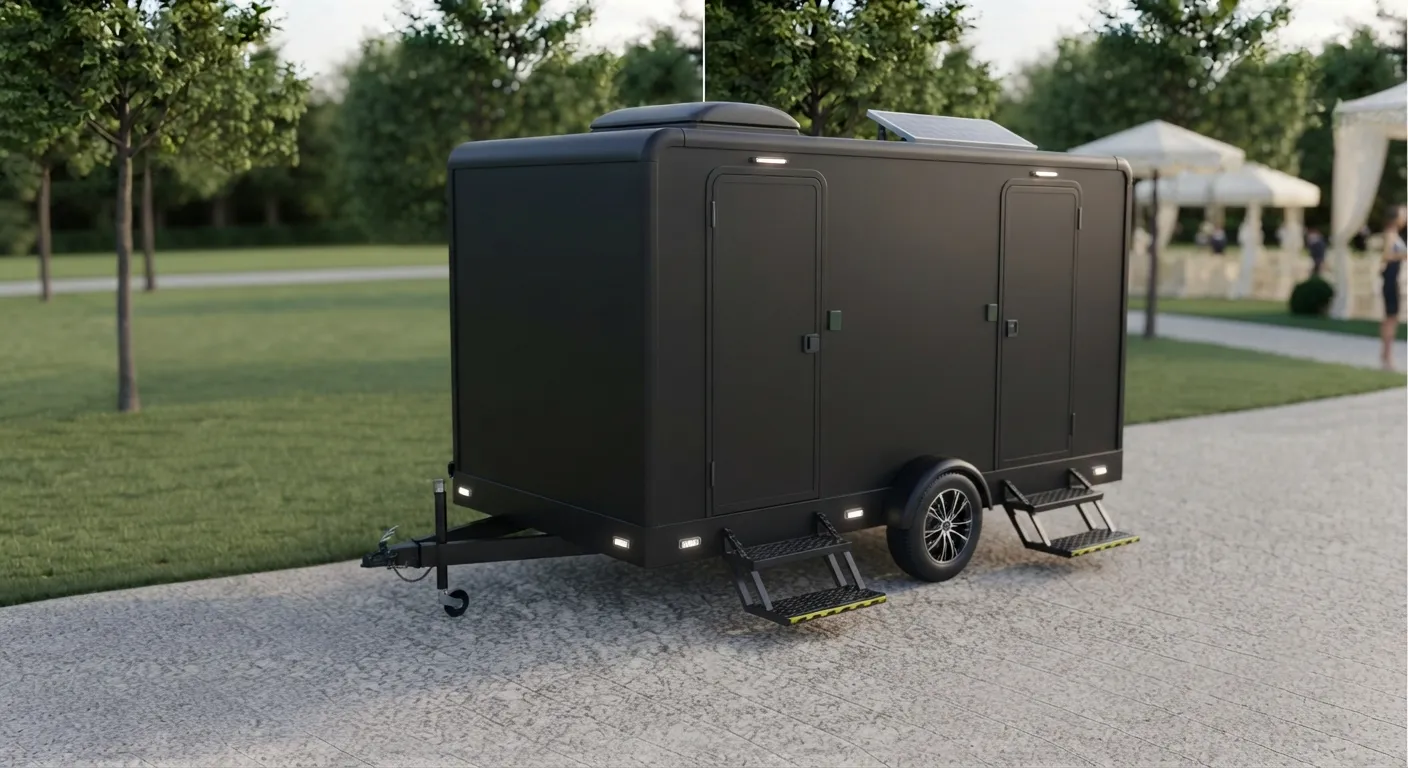
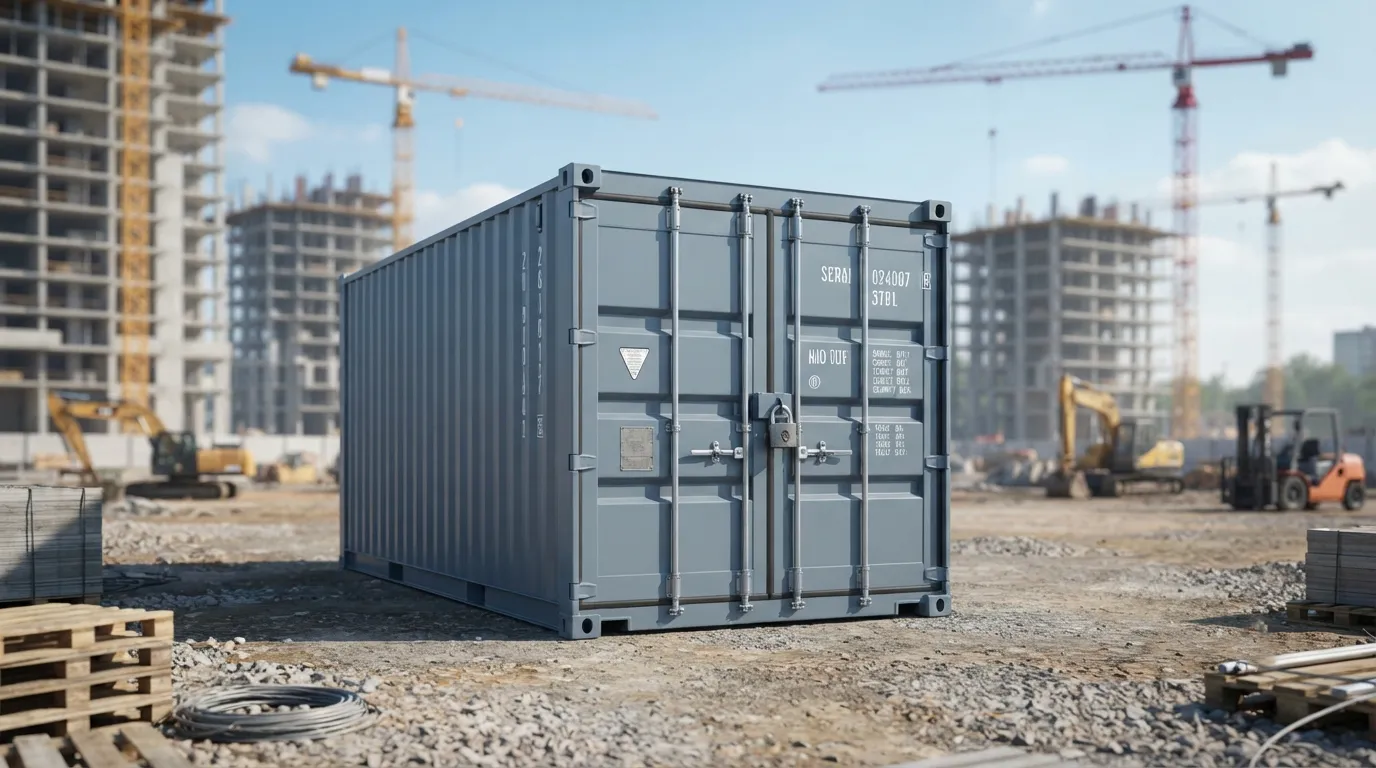
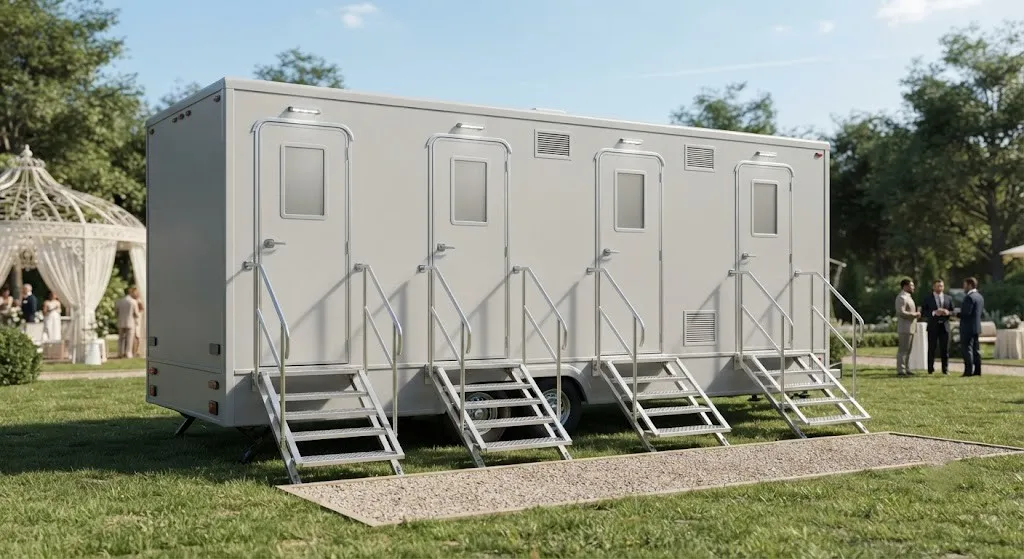
Rogers sits close enough to several towns that a lot of crews split time between job sites; Bentonville is 7.3 miles northwest and Lowell is 7.6 miles south, both close enough that one delivery route often covers both. If your project needs more than toilets, add a roll-off dumpster rental for debris, a temporary fence rental for site security, or a storage container rental for tools and materials, since most job sites need all three eventually. For weekend events, a restroom trailer rental is worth pricing against a bank of standard units, especially once your guest count climbs past what a handful of porta potties can comfortably handle.
Frequently asked questions
What's the difference between a standard unit and a deluxe unit?
A standard unit is a basic non-flush toilet, about 44 by 48 inches on the ground and 92 inches tall. A deluxe flushable porta potty adds a flush mechanism and sink, running $85 to $1,200 a day depending on features, and works better for weddings or VIP areas than job sites.
Do I need a permit for a porta potty in Rogers?
Permit rules vary by placement, especially in the public right of way, and that needs confirming directly with the City of Rogers. Our porta potty permit requirements page walks through what to ask before you commit to a spot.
How far in advance should I book?
Book standard units at least a week out for job sites, longer for weekend events, since weekend rates run higher than weekday rentals. Delivery fees fall between $50 and $150 for a weekly rental, so lock in dates early to avoid rush charges.
Can I rent just one porta potty for a weekend event?
Yes, a single standard porta potty rental works fine for small gatherings under the Z4.3 baseline of 10 users. Add a second unit if you expect more than that, or if alcohol is involved, since usage climbs fast.
What happens if a unit needs emergency service?
Call your provider immediately; most sanitation companies offer emergency porta potty rental and service dispatch outside normal routes. A tank nearing capacity or a tipped unit shouldn't wait for the next scheduled visit.
Next step
Get a delivery date
Tell us the address, the dates and the headcount. We size the order and confirm the route.